
Sulfur
Sulfur (S) is a naturally occurring non-metallic chemical element with atomic number 16 and one of the most important raw materials in modern industry. Under normal conditions, sulfur exists as a bright yellow crystalline solid composed primarily of cyclic octatomic molecules (S₈). It is a critical component in agriculture, chemical manufacturing, petroleum refining, metallurgy, and countless industrial processes worldwide.
Beyond its industrial importance, sulfur is an essential nutrient for plants, animals, and humans. It plays a fundamental role in biological systems, supporting protein formation, enzyme activity, and metabolic processes. Globally, sulfur remains one of the most traded chemical commodities, with major exporters including Iran, Russia, Saudi Arabia, and Canada, while China continues to be the world's largest importer.
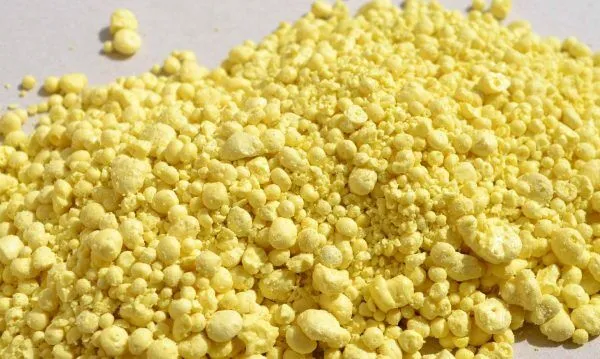
Global Importance of Sulfur
Sulfur serves as a cornerstone of the global chemical industry. More than half of worldwide sulfur production is converted into sulfuric acid (H₂SO₄), one of the highest-volume industrial chemicals manufactured globally. Sulfuric acid is indispensable in fertilizer production, mineral processing, petroleum refining, wastewater treatment, and chemical synthesis.
Fertilizer Production
Essential raw material for phosphoric acid and phosphate fertilizer manufacturing.
Petroleum Refining
Used extensively in refining operations and fuel desulfurization processes.
Chemical Manufacturing
Key feedstock for sulfuric acid, industrial chemicals, and specialty compounds.
Metallurgy
Supports ore processing, metal extraction, and industrial smelting operations.
Biological Importance of Sulfur

Sulfur is indispensable for all living organisms and is present in several essential amino acids and vitamins. Compounds such as cysteine, cystine, and methionine contain sulfur and contribute to protein synthesis, enzyme function, and cellular metabolism.
Sulfur-containing vitamins including biotin (Vitamin B7) and thiamine (Vitamin B1) are critical for healthy biological functioning. Sulfur also contributes to the formation of keratin, the structural protein found in skin, hair, feathers, and nails.
Chemical Properties of Sulfur
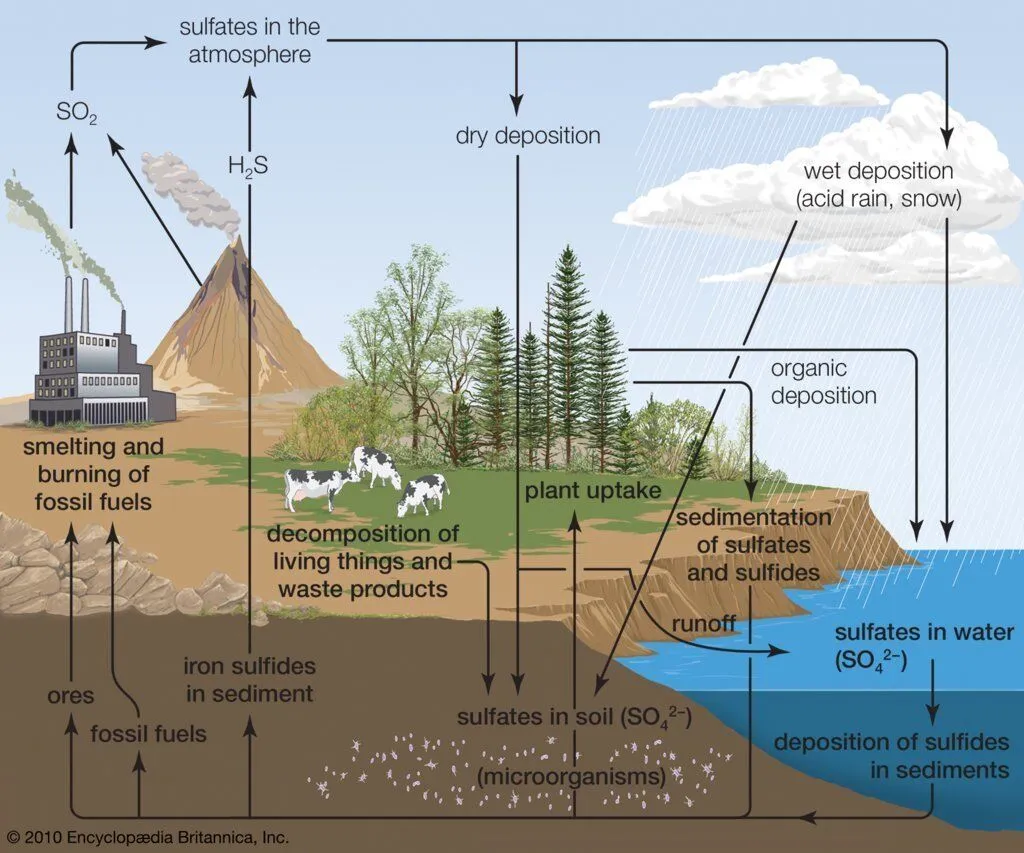
Sulfur combines readily with most chemical elements, with notable exceptions including gold, platinum, and noble gases. It occurs naturally both as elemental sulfur and in compound forms such as sulfides (S²⁻) and sulfates (SO₄²⁻).
Its crystallography is complex, producing several allotropes under different environmental conditions. Rhombic sulfur and monoclinic sulfur are among the most common crystalline forms used in industrial applications.
Major Commercial Forms of Sulfur
Sulfur Granules
Widely used in fertilizer manufacturing, chemical production, and international bulk trade.
Sulfur Pastilles
Uniform solid form providing safe storage, transportation, and controlled handling.
Sulfur Lumps
Produced through solidification and mechanical processing for industrial use.
Sulfur Powder
Used in rubber vulcanization, agriculture, pharmaceuticals, and specialty chemicals.
Sulfur Prills
Spherical solid sulfur produced by cooling molten sulfur with air or water.

Hydrogen Sulfide (H₂S)
Hydrogen sulfide is a naturally occurring sulfur compound found in crude oil, natural gas, coal deposits, volcanic gases, and mineral waters. Under normal conditions, it is a colorless gas with a characteristic odor often described as rotten eggs.
Petroleum refineries and gas processing facilities routinely remove hydrogen sulfide during fuel purification processes. The recovered H₂S is subsequently converted into elemental sulfur through sulfur recovery units, making it a major source of commercial sulfur production.
Sulfur Dioxide (SO₂)
Sulfur dioxide is an important industrial gas produced through sulfur combustion and various metallurgical processes. It serves as the primary feedstock for sulfuric acid production and is used in chemical manufacturing, solvent extraction, pulp processing, and food preservation.
Its strong antimicrobial properties make sulfur dioxide useful for preventing bacterial growth and preserving food products, particularly dried fruits and beverages.

Sulfuric Acid (H₂SO₄)
Often referred to as the "King of Chemicals," sulfuric acid is among the most important industrial chemicals worldwide. Its production volume exceeds nearly all manufactured chemicals except water.
Primary applications include fertilizer production, mineral processing, petroleum refining, wastewater treatment, chemical synthesis, and industrial manufacturing.
Industrial Applications of Sulfur
Sulfur and sulfur derivatives support a vast range of industries and manufacturing processes across the global economy.
Fertilizers
Phosphate fertilizers and agricultural nutrients.
Petroleum Refining
Fuel processing, desulfurization, and chemical treatment.
Metallurgy
Ore leaching, mineral extraction, and metal processing.
Rubber Industry
Vulcanization and performance enhancement.
Pharmaceuticals
Drug manufacturing and specialty chemicals.
Water Treatment
Industrial and municipal water purification systems.
Pulp & Paper
Chemical pulping and bleaching processes.
Construction Materials
Industrial additives and specialty products.
Standard Sulfur Product Forms
| Product Form | Description | Primary Uses |
|---|---|---|
| Granular Sulfur | Free-flowing solid granules | Fertilizers, exports, industrial processing |
| Pastille Sulfur | Uniform disc-shaped solid | Chemical manufacturing |
| Lump Sulfur | Large solid pieces | Industrial processing |
| Powder Sulfur | Finely ground sulfur | Agriculture, pharmaceuticals, rubber |
| Prilled Sulfur | Spherical sulfur particles | Bulk handling and fertilizer blending |
Conclusion
Sulfur remains one of the most important industrial elements supporting global agriculture, energy, chemical manufacturing, metallurgy, and environmental management. Its versatility, abundance, and strategic importance make it indispensable across numerous industries.
From sulfuric acid production and fertilizer manufacturing to petroleum refining and advanced chemical processing, sulfur continues to play a critical role in economic development and industrial sustainability worldwide. As environmental standards evolve and industrial technologies advance, sulfur will remain a vital component of modern manufacturing and global trade.