
Bitumen Paving Grade
Bitumen Paving Grade is one of the most widely used road construction materials worldwide. It serves as the primary binder in asphalt mixtures, providing the adhesion and flexibility required to create durable pavements, highways, airport runways, parking areas, and infrastructure surfaces. Its ability to bind mineral aggregates together while resisting traffic loads and environmental conditions makes it an essential component of modern transportation networks.
Produced through the refining of crude oil, paving grade bitumen is engineered to deliver optimal performance under varying temperatures and traffic conditions. Its unique combination of durability, elasticity, waterproofing capability, and resistance to aging ensures long-term pavement performance.

What is Paving Grade Bitumen?
Paving Grade Bitumen is a temperature-sensitive hydrocarbon binder used primarily in asphalt concrete production. When heated, the material becomes fluid and workable, allowing it to be mixed, transported, sprayed, and compacted efficiently. Once cooled, it returns to a semi-solid state, providing the strength and flexibility required for pavement structures.
Road Construction
Used extensively in highways, streets, and transportation infrastructure.
Airport Runways
Provides durability and stability under extreme loading conditions.
Parking Areas
Creates smooth and long-lasting pavement surfaces.
Embankment Dams
Acts as a waterproofing and sealing component in infrastructure projects.
Key Characteristics of Paving Grade Bitumen
The effectiveness of paving grade bitumen is determined by several important physical and performance characteristics that contribute to pavement durability and long-term service life.
| Property | Benefit |
|---|---|
| Strong Adhesion | Binds aggregates securely and maintains pavement integrity. |
| Water Resistance | Protects pavement structures from moisture damage. |
| Flexibility | Allows pavements to accommodate traffic and temperature movements. |
| Durability | Provides long service life under demanding conditions. |
| Low Toxicity | Safe handling when used according to industry standards. |
| Cost Effectiveness | Offers economical pavement solutions compared to alternative materials. |
Classification of Paving Grade Bitumen
Paving grade bitumen is classified using viscosity grades, penetration grades, or performance specifications depending on regional standards. These classifications help engineers select the most suitable binder for climate conditions, traffic volumes, and pavement design requirements.

Australian Viscosity Grades
| Grade | Description |
|---|---|
| C170 | The most commonly used paving grade for sprayed sealing applications. |
| C240 | Higher viscosity grade suitable for warmer climates and heavier traffic conditions. |
| C320 | High viscosity binder used in demanding environments with elevated pavement temperatures and stresses. |
New Zealand Penetration Grades
| Grade | Typical Application |
|---|---|
| 180/200 | Commonly used for sprayed seal works and moderate climate conditions. |
| 130/150 | Provides slightly greater hardness and improved resistance to deformation. |
| 80/100 | Preferred in hotter climates and areas experiencing bleeding pavements. |
Important Performance Properties
Selection of paving grade bitumen depends on several engineering properties that directly influence pavement performance and service life.
Viscosity
Determines flow characteristics and workability during mixing and application.
Penetration
Measures consistency and hardness, helping determine climate suitability.
Softening Point
Indicates resistance to deformation at elevated temperatures.
Ductility
Measures the ability to stretch without cracking under stress.
Temperature Susceptibility
Evaluates performance across varying climate conditions.
Aging Resistance
Ensures long-term durability and pavement stability.
Applications of Paving Grade Bitumen
Paving grade bitumen is utilized across numerous transportation and infrastructure projects due to its excellent binding and waterproofing properties.
Highways & Roads
Provides smooth, durable driving surfaces capable of handling heavy traffic.
Airport Pavements
Offers strength and flexibility under repeated aircraft loading.
Urban Streets
Creates safe and comfortable transportation corridors.
Industrial Areas
Supports high-load operations and heavy vehicle movement.
Parking Facilities
Ensures long-lasting pavement performance with minimal maintenance.
Surface Treatments
Used in sprayed seals, overlays, and pavement preservation programs.
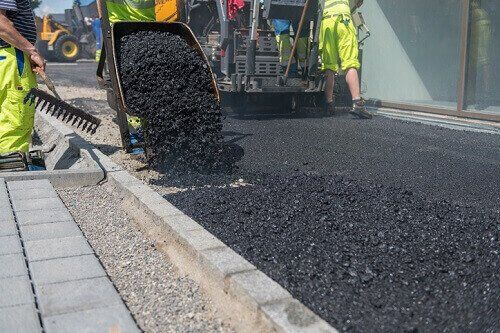
Alternative Delivery Systems
While paving grade bitumen is traditionally supplied and applied at elevated temperatures, alternative delivery systems have become increasingly popular in modern pavement engineering.
| System | Advantages |
|---|---|
| Hot Bitumen | Industry-standard solution with proven performance and established infrastructure. |
| Bitumen Emulsion | Lower application temperatures and improved environmental performance. |
| Foamed Bitumen | Enhanced recycling capabilities and reduced energy consumption. |
| Modified Bitumen | Improved elasticity, durability, and resistance to rutting and cracking. |
Advantages of Paving Grade Bitumen
| Advantage | Description |
|---|---|
| Excellent Adhesion | Creates strong aggregate bonding and structural integrity. |
| Long Service Life | Provides durable pavement performance under heavy loading. |
| Weather Resistance | Performs effectively in varying climatic conditions. |
| Flexible Performance | Accommodates thermal expansion and traffic stresses. |
| Economic Solution | Offers cost-effective construction and maintenance benefits. |
| Recyclability | Supports sustainable pavement rehabilitation and reuse programs. |
Conclusion
Bitumen Paving Grade remains the foundation of modern road construction and pavement engineering. Its unique combination of adhesion, flexibility, durability, and temperature stability makes it the preferred binder for highways, airports, parking facilities, and infrastructure projects around the world.
Available in various viscosity and penetration grades, paving bitumen can be tailored to meet specific climatic conditions and traffic demands. As pavement technologies continue to evolve, paving grade bitumen remains an essential material for delivering safe, durable, and cost-effective transportation infrastructure that supports long-term economic development and mobility.