
Introduction to Gilsonite Cementing
Gilsonite Cementing is a specialized oilfield cementing process that incorporates natural Gilsonite into cement slurries used for wellbore construction and zonal isolation. Cementing involves placing cement in the annular space between the casing and the wellbore wall to secure the casing, prevent fluid migration, and protect underground formations throughout the life of the well.
Gilsonite serves as a lightweight, naturally occurring hydrocarbon additive that enhances slurry performance, improves bonding, reduces fluid loss, and helps control gas migration. Due to its low density, flexibility, and self-healing characteristics, Gilsonite has been widely used in primary cementing and remedial cementing operations for more than five decades.

What is Wellbore Cementing?
Wellbore cementing is the process of pumping a cement slurry into the annular space between the casing and the surrounding formation. The purpose is to create a durable seal that isolates different geological zones, prevents fluid communication, and supports the structural integrity of the well.
- Provide zonal isolation throughout the life of the well.
- Prevent gas migration and fluid crossflow.
- Protect freshwater aquifers from contamination.
- Secure casing strings within the formation.
- Maintain long-term well integrity.
Why Gilsonite is Used in Cementing
Gilsonite is added to oil well cement slurries as a lightweight aggregate and performance enhancer. Its unique physical and chemical properties improve slurry rheology, strengthen zonal isolation, reduce lost circulation, and support compressive strength development.
Density Reduction
Replaces heavier aggregate materials and reduces slurry density, lowering pumping costs.
Lost Circulation Control
Provides excellent bridging properties that help seal fractures and porous formations.
Gas Migration Prevention
Reduces annular gas flow and improves long-term zonal isolation.
Improved Bonding
Enhances bonding between cement, casing, and surrounding formations.
Application of Gilsonite in Oil Well Cementing
Standard lump grade Gilsonite is commonly used in cementing operations. During well completion, cement slurry is pumped downhole to encase the casing and isolate producing formations. Replacing part of the heavy aggregate with lightweight Gilsonite particles reduces overall slurry density and improves pumping efficiency.
Since its introduction to the oil industry in 1957, Gilsonite has been successfully used in thousands of cementing operations including surface, intermediate, and production casing cementing, remedial squeeze jobs, lost circulation treatments, and plug-back operations.

Advantages of Using Gilsonite in Cementing
Improved Zonal Isolation
Creates a more effective seal between geological formations and casing.
Lower Environmental Risk
Reduces fluid migration and helps protect groundwater resources.
Reduced Cementing Costs
Lightweight characteristics reduce material consumption and pumping requirements.
Higher Recovery Rates
Supports long-term well productivity through improved cement integrity.
Enhanced Mud Removal
Improves displacement efficiency and promotes cleaner wellbores.
Crack Healing Capability
Provides self-healing characteristics that maintain cement sheath integrity.
Properties That Make Gilsonite an Ideal Cement Additive
| Property | Benefit in Cementing Operations |
|---|---|
| Low Specific Gravity (1.04–1.06) | Reduces slurry density and pumping costs. |
| High Softening Point (>340°F) | Maintains performance under elevated temperatures. |
| Semi-Polymeric Behavior | Provides flexibility and crack resistance. |
| Low Moisture Content | Improves slurry consistency and stability. |
| Chemically Inert | Compatible with most cement additives. |
| Impermeable Structure | Reduces permeability and fluid migration. |
| High Purity | Ensures consistent field performance. |
Benefits for Cement Slurry Performance
- Increasing slurry yield.
- Reducing slurry density.
- Controlling free water.
- Lowering slurry water ratio.
- Promoting favorable rheological properties.
- Reducing equivalent circulating density (ECD).
- Preventing lost circulation.
- Improving wellbore cleaning and mud removal.
Benefits for Set Cement Performance
Beyond improving slurry characteristics, Gilsonite also enhances the performance of hardened cement after placement. Its flexible and impermeable nature contributes to long-term well integrity and durability.
Maintains Strength
Provides compressive strength comparable to conventional cement systems.
Increases Flexibility
Helps accommodate formation movement and thermal stress.
Reduces Cracking
Minimizes cement sheath failure caused by stress cycles.
Self-Healing Action
Helps seal micro-fissures and maintain zonal isolation.
Lower Permeability
Reduces fluid migration pathways through the cement sheath.
Improved Bond Strength
Strengthens adhesion to both casing and formation.
Self-Healing Characteristics of Gilsonite
One of the most valuable features of Gilsonite in oil well cementing is its self-healing behavior. The material exhibits flexibility, deformability, swelling capacity, impermeability, and non-porous characteristics that enable it to help seal micro-cracks that may develop within the cement sheath during the life of the well.
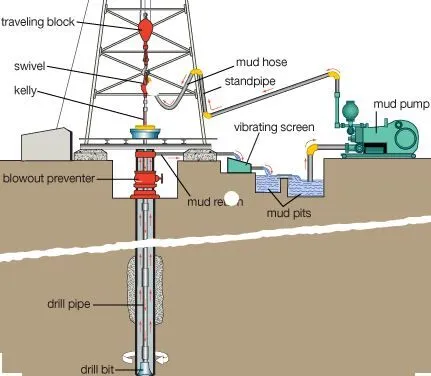
Typical Cementing Applications
| Application | Purpose |
|---|---|
| Primary Cementing | Isolation of formations and casing support. |
| Lost Circulation Zones | Bridging fractures and reducing slurry losses. |
| Squeeze Cementing | Repairing channels and sealing leaks. |
| Plug Back Operations | Restoring circulation and isolating intervals. |
| Re-Cementing Jobs | Correcting inadequate cement coverage. |
| Abandonment Plugs | Permanent sealing of wells and pipelines. |
Conclusion
Gilsonite Cementing has become an indispensable technology in modern oil and gas operations due to its ability to improve cement slurry performance, enhance zonal isolation, reduce lost circulation, and strengthen long-term well integrity. Its lightweight nature, self-healing characteristics, high softening point, and excellent compatibility with cement systems make it one of the most effective additives available for challenging wellbore environments.
From primary cementing and remedial operations to abandonment and lost circulation treatments, Gilsonite delivers significant operational, environmental, and economic benefits. As drilling environments become increasingly complex and regulatory requirements continue to evolve, Gilsonite remains a proven solution for achieving reliable, durable, and environmentally responsible cementing performance.