
Gilsonite (Natural Bitumen)
Gilsonite, also known as Natural Bitumen, Natural Asphalt, Uintaite, or Asphaltite, is a naturally occurring solid hydrocarbon resin widely used across oil drilling, asphalt modification, foundry operations, inks, coatings, waterproofing systems, and industrial manufacturing.
Renowned for its high carbon content, excellent compatibility with petroleum products, strong binding properties, and superior waterproofing capabilities, Gilsonite has become one of the most valuable natural additives used in modern industrial applications worldwide.

What is Gilsonite?
Gilsonite is a naturally occurring hydrocarbon mineral formed through the transformation of crude oil deposits over millions of years. During geological processes involving pressure, heat, and oxidation, lighter hydrocarbon fractions escaped while heavier components solidified into vertical vein deposits.
Unlike conventional asphalt or refinery-produced bitumen, Gilsonite contains higher concentrations of natural resins and asphaltenes, providing exceptional performance in demanding industrial applications.
Natural Origin
Formed naturally over millions of years through geological transformation of crude oil deposits.
High Carbon Content
Contains exceptionally high carbon concentrations that enhance durability and performance.
Excellent Solubility
Compatible with aromatic solvents, petroleum oils, and hydrocarbon systems.
Superior Adhesion
Provides strong bonding characteristics in coatings, asphalt, and industrial formulations.
History of Gilsonite
The commercial development of Gilsonite began in the late nineteenth century when Samuel H. Gilson recognized its industrial potential. Initially used in paints, varnishes, and waterproofing products, it later expanded into drilling fluids, asphalt modification, printing inks, and foundry applications.
Today, Gilsonite is traded globally and utilized across North America, Europe, Asia, the Middle East, Africa, and Latin America.

Physical Properties of Gilsonite
| Property | Typical Value |
|---|---|
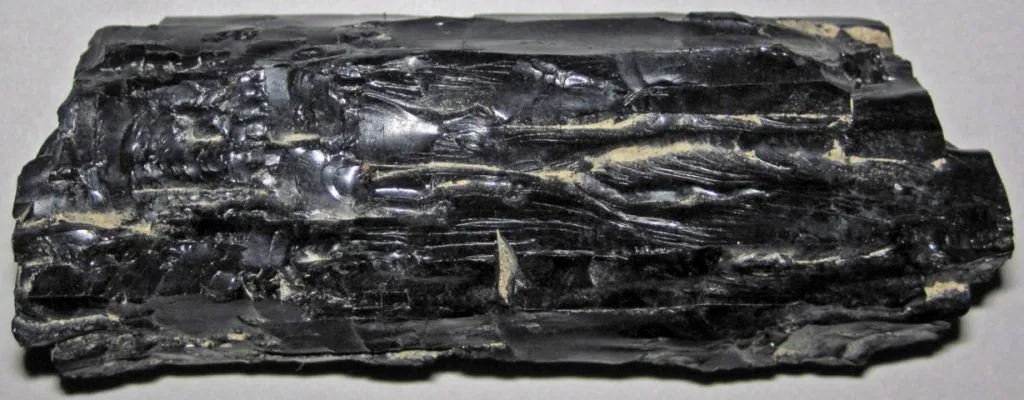
| Appearance | Jet Black, Glossy, Brittle |
| Specific Gravity | 1.04 – 1.10 |
| Hardness (Mohs) | 2 – 3 |
| Softening Point | 140°C – 220°C |
| Carbon Content | 70% – 85% |
| Ash Content | Typically Below 10% |
Chemical Characteristics
Gilsonite’s chemical composition makes it highly desirable for coatings, drilling fluids, inks, asphalt modification, and industrial manufacturing.
High Carbon Content
Typically contains between 70% and 85% carbon, contributing to strength and durability.
Excellent Solubility
Easily dissolves in aromatic solvents, petroleum oils, and hydrocarbon systems.
Natural Resins
Contains naturally occurring resins that enhance adhesion and waterproofing.
Low Ash Content
Premium grades contain minimal impurities for superior industrial performance.
Types of Gilsonite
High Purity Grade
Low ash content and high carbon concentration suitable for inks, coatings, paints, and specialty resins.
Medium Grade
Widely used in drilling fluids, asphalt modification, and construction materials.
Industrial Grade
Designed for foundries, waterproofing systems, cement additives, and large-scale industrial applications.
Micronized Powder
Available in various mesh sizes for improved mixing and application performance.
Available Powder Mesh Sizes
| Mesh Size | Application |
|---|---|
| 30 Mesh | Asphalt & Construction |
| 50 Mesh | General Industrial Use |
| 80 Mesh | Foundries & Coatings |
| 100 Mesh | Drilling Fluids |
| 200 Mesh | Paints & Inks |
| 325 Mesh | High-End Specialty Applications |
Industrial Applications
Oil & Gas Drilling
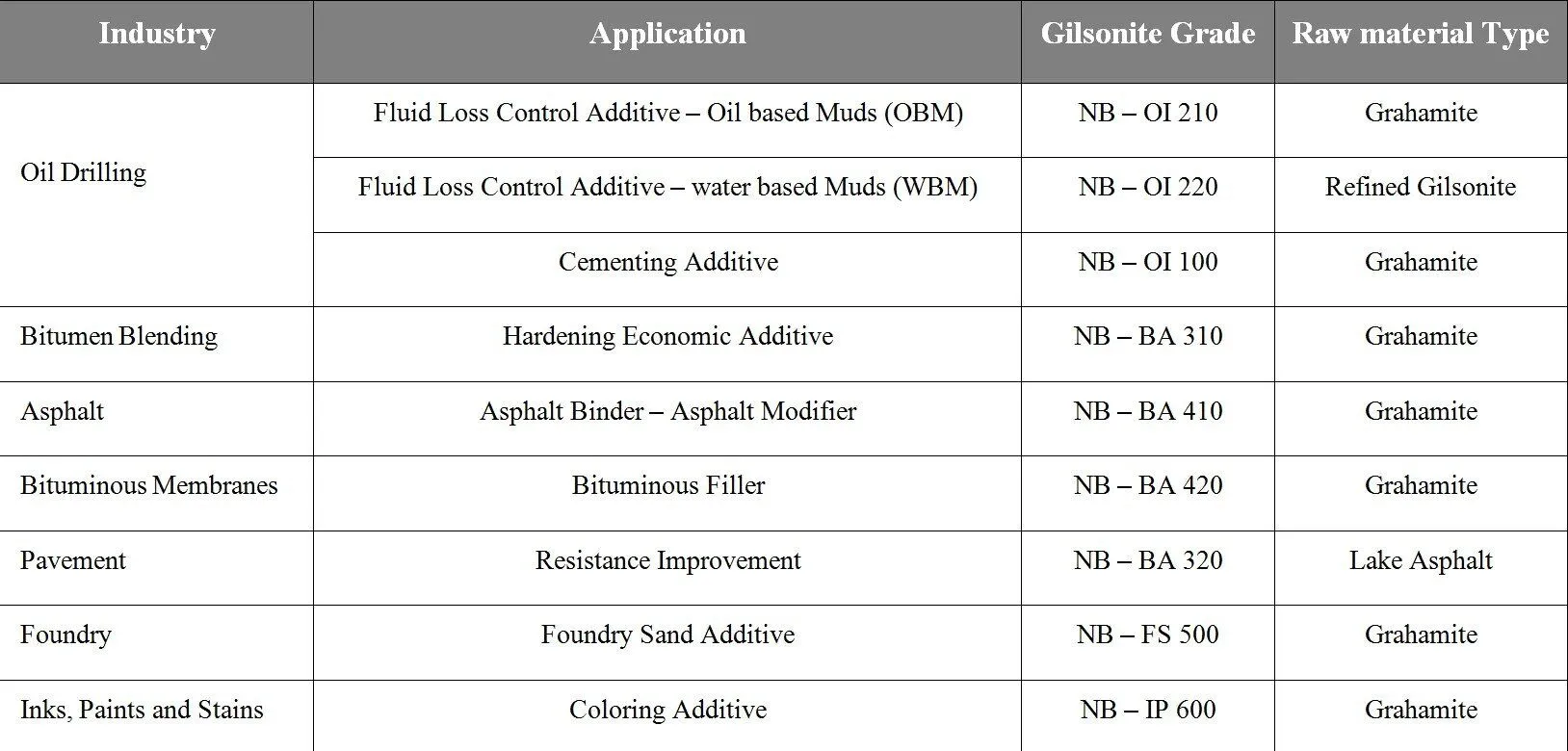
Controls fluid loss, strengthens wellbores, reduces differential sticking, and improves drilling efficiency.
Asphalt Modification
Increases pavement hardness, improves rutting resistance, and extends road life.
Printing Inks
Provides deep black pigmentation, improved adhesion, and faster drying.
Paints & Coatings
Enhances gloss, corrosion resistance, waterproofing, and weather protection.
Foundry Industry
Improves mold release, casting quality, and surface finish.
Construction Materials
Used in waterproofing systems, roofing membranes, and concrete additives.
Benefits of Using Gilsonite
Cost Effective
Delivers significant performance improvements while maintaining economical production costs.
Environmentally Friendly
Naturally occurring material that reduces dependence on synthetic additives.
Multi-Industry Versatility
Suitable for construction, energy, manufacturing, coatings, and infrastructure sectors.
Superior Performance
Enhances durability, strength, waterproofing, and resistance to environmental conditions.
Packaging Options
| Product Form | Packaging |
|---|---|
| Lump Gilsonite | 500–1000 Kg Jumbo Bags |
| 30–40 Mesh | 25 Kg Bags / Jumbo Bags |
| 100 Mesh | 25 Kg Bags / Jumbo Bags |
| 200 Mesh | 25 Kg Bags, Multi-Paper Bags, Jumbo Bags |
| 300 Mesh | 25 Kg Bags & Jumbo Bags |
| Bulk Supply | Vessel Shipment Available |
Conclusion
Gilsonite remains one of the world's most valuable natural hydrocarbon minerals, offering exceptional performance across oil drilling, asphalt modification, coatings, inks, foundries, and construction applications.
Its unique combination of high carbon content, excellent adhesion, superior waterproofing, thermal stability, and compatibility with petroleum products makes it an indispensable additive for industries seeking enhanced product performance and long-term durability.
As global infrastructure development, energy exploration, and industrial manufacturing continue to expand, Gilsonite is expected to remain a critical material supporting innovation and performance improvements across multiple sectors.