
Benzene (C₆H₆) is one of the most important aromatic hydrocarbons in the global petrochemical industry. It serves as a foundational feedstock for plastics, synthetic fibers, detergents, pharmaceuticals, coatings, dyes, rubber products, and countless industrial chemicals.

Introduction
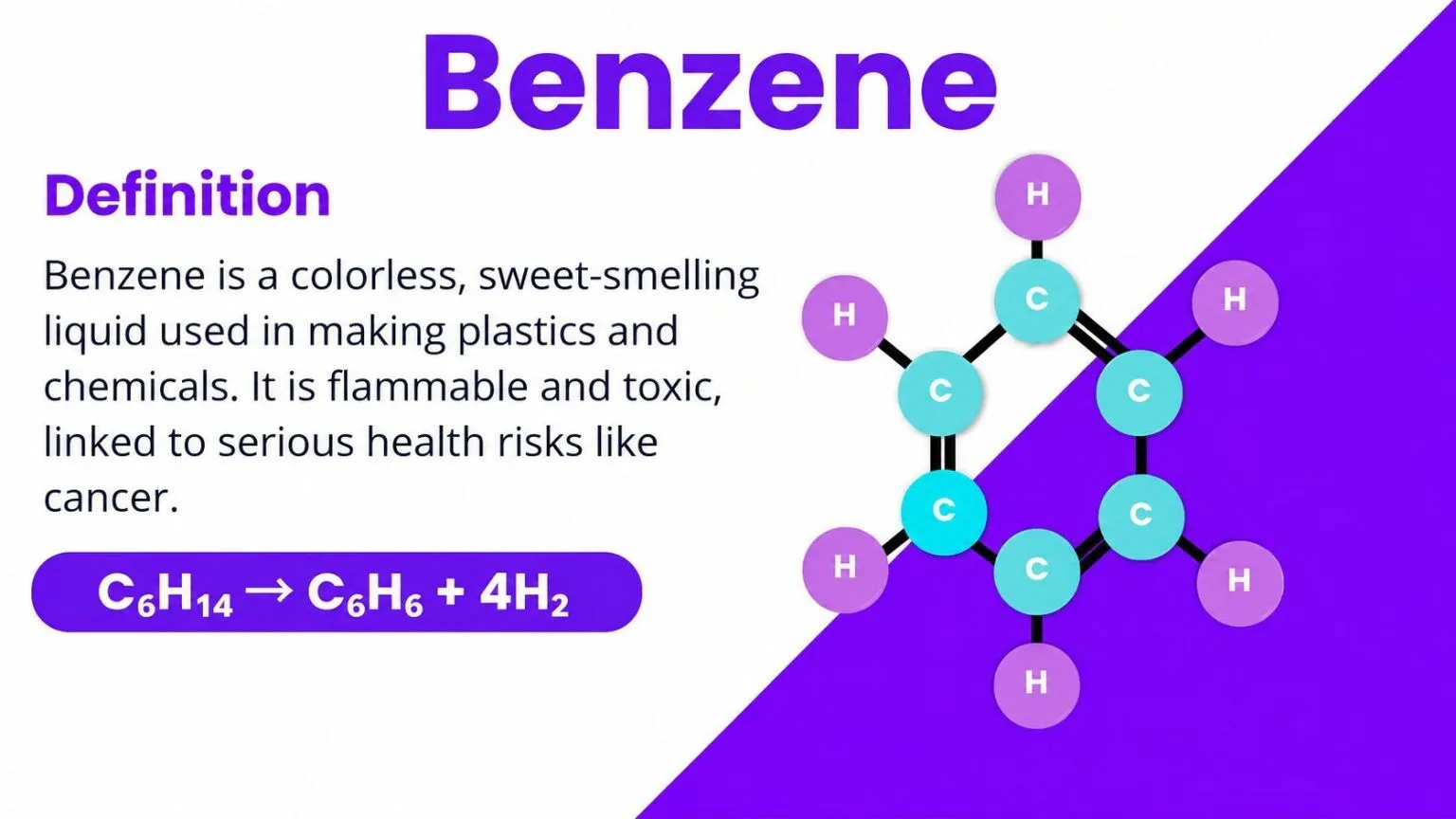
Benzene is a colorless, highly flammable liquid characterized by its distinctive sweet odor and unique aromatic ring structure. As one of the most extensively studied compounds in chemistry, it has played a fundamental role in advancing the understanding of aromaticity and molecular bonding. Today, Benzene remains a critical raw material throughout the petrochemical value chain, supporting industries ranging from construction and automotive manufacturing to healthcare, electronics, textiles, and consumer goods.
Beyond its industrial significance, Benzene occupies a unique place in scientific history. The study of its molecular structure contributed significantly to the development of modern organic chemistry. While its commercial importance is undeniable, Benzene is also associated with important health and environmental considerations that require strict handling procedures and regulatory oversight.
Production of Benzene
Commercial Benzene production is primarily integrated into petroleum refining and petrochemical operations. Although naturally present in crude oil and natural gas, industrial demand requires large-scale production through advanced conversion technologies.
Catalytic Reforming
Petroleum naphtha is processed over specialized catalysts to convert paraffins and naphthenes into aromatic compounds, including Benzene.
Steam Cracking
Benzene is recovered as a valuable by-product during the production of ethylene and propylene from hydrocarbon feedstocks.
Hydrodealkylation
Toluene reacts with hydrogen at elevated temperatures and pressures, producing Benzene and increasing aromatic supply.
Toluene Disproportionation
Two molecules of toluene are converted into Benzene and xylene to balance market demand.
Historically, coal carbonization also served as a significant source of Benzene through the recovery of aromatic compounds from coal tar. Modern production is followed by extensive purification processes including distillation, extraction, and separation technologies to ensure commercial-grade quality.
Functions and Importance of Benzene
The primary role of Benzene is as a feedstock for the manufacture of chemical intermediates. Rather than being used directly by consumers, it is transformed into numerous downstream products that support modern industry.
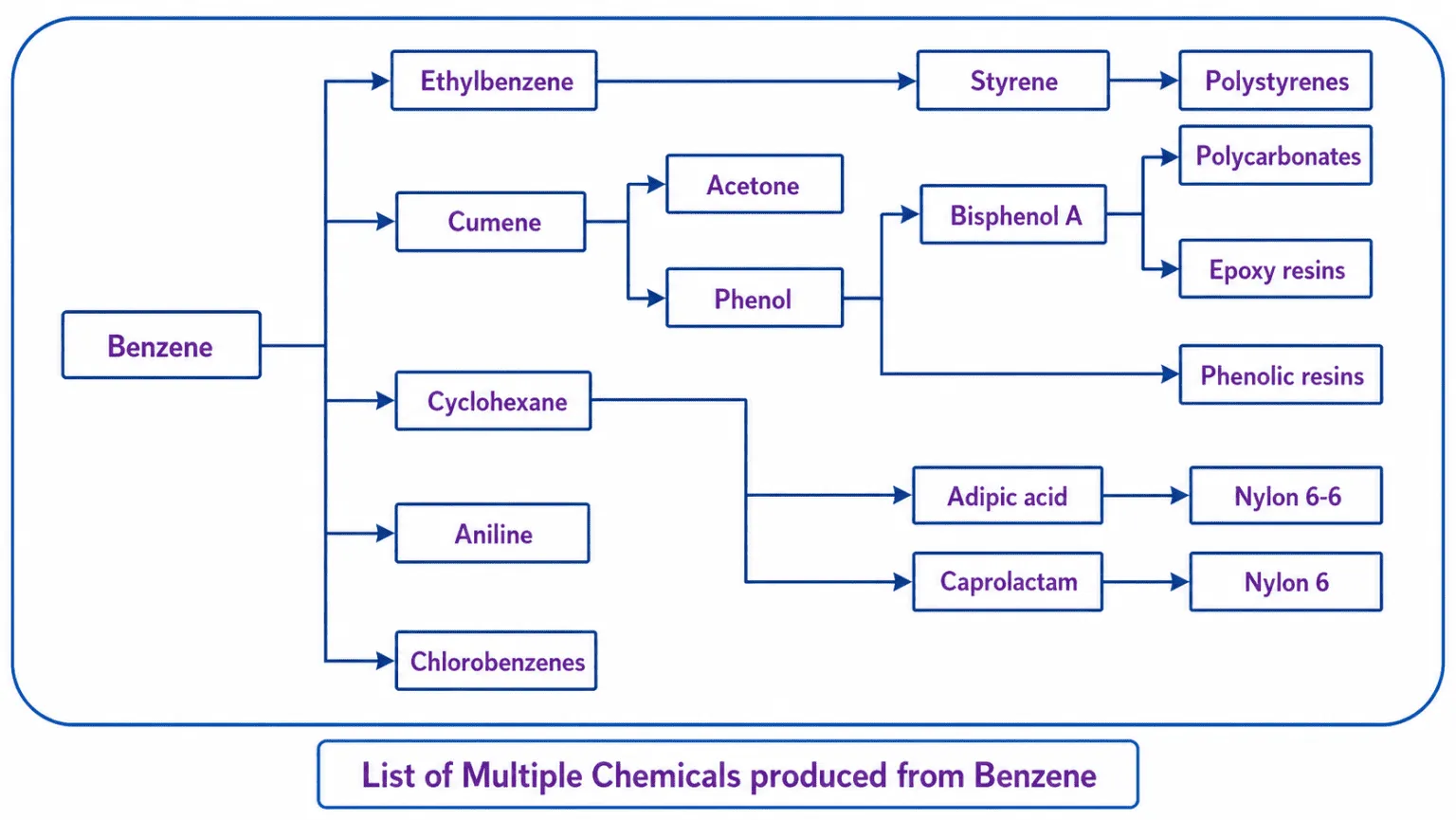
Major derivatives include ethylbenzene for styrene production, cumene for phenol and acetone manufacturing, cyclohexane for nylon production, and alkylbenzene compounds used in detergents. Additional derivatives support the production of pharmaceuticals, dyes, agricultural chemicals, synthetic rubber, engineering polymers, and specialty materials.
The economic importance of Benzene extends across automotive, electronics, healthcare, construction, packaging, textile, and consumer product sectors. Without Benzene-derived chemicals, many modern materials would be significantly more expensive or difficult to manufacture.
Physical Properties of Benzene
| Property | Value |
|---|---|
| Molecular Formula | C₆H₆ |
| Molecular Weight | 78.11 g/mol |
| Appearance | Clear, Colorless Liquid |
| Odor | Sweet Aromatic Odor |
| Boiling Point | 80.1°C |
| Melting Point | 5.5°C |
| Density | 0.876 g/cm³ |
| Water Solubility | Limited |
Benzene remains liquid across a broad range of environmental conditions. Its volatility, low flash point, and ability to form flammable vapor-air mixtures require careful storage and handling procedures.
Chemical Properties of Benzene
Benzene consists of six carbon atoms arranged in a planar aromatic ring with delocalized electrons distributed across the structure. This electron distribution creates remarkable stability compared with many other unsaturated hydrocarbons.
Unlike alkenes, Benzene predominantly undergoes substitution reactions rather than addition reactions. Common industrial reactions include nitration, sulfonation, halogenation, Friedel-Crafts alkylation, Friedel-Crafts acylation, hydrogenation, and oxidation processes.
Its exceptional stability and predictable reactivity make Benzene one of the most important compounds in industrial organic chemistry.
Industrial Applications of Benzene
Benzene is among the world's most widely utilized petrochemical feedstocks. The majority of production is consumed in downstream chemical manufacturing.
- Ethylbenzene and Styrene Production
- Phenol and Acetone Manufacturing
- Nylon and Engineering Plastics
- Linear Alkylbenzene Detergents
- Pharmaceutical Intermediates
- Agricultural Chemicals
- Synthetic Rubber Production
- Paints, Coatings, Dyes, and Specialty Chemicals
Health Effects and Toxicology
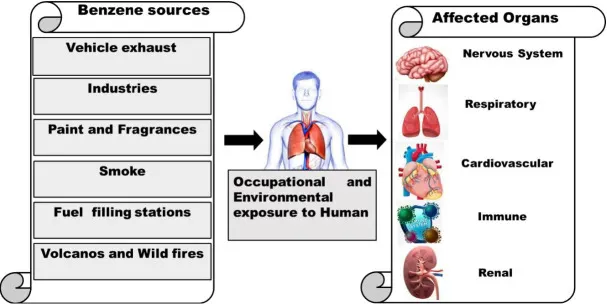
While industrially valuable, Benzene is internationally recognized as a known human carcinogen. Exposure may occur through inhalation, skin contact, or ingestion, with inhalation representing the most common route in occupational environments.
Short-term exposure can result in headaches, dizziness, nausea, respiratory irritation, and central nervous system effects. Long-term exposure primarily affects the bone marrow and blood-forming organs, potentially reducing blood cell production and increasing the risk of leukemia and other blood-related disorders.
Industries handling Benzene implement engineering controls, monitoring programs, personal protective equipment, employee training, and medical surveillance programs to minimize risk.
Environmental Considerations and Safety
Environmental management is a critical aspect of responsible Benzene operations. Because Benzene is volatile, atmospheric releases may occur during production, storage, transportation, and handling. Environmental monitoring programs help identify and control emissions.
Although Benzene exhibits limited water solubility, accidental releases can contaminate groundwater and surface water resources. Modern facilities utilize advanced vapor recovery systems, emission controls, spill response programs, and pollution-prevention technologies to minimize environmental impact.
Worker safety measures typically include protective clothing, gloves, eye protection, respiratory equipment where required, and ongoing safety training.
Future Outlook and Conclusion
Benzene continues to serve as one of the most important building blocks in the global chemical industry. Its unique aromatic structure, versatile chemistry, and broad industrial applications ensure ongoing demand across numerous manufacturing sectors.
Future developments are expected to focus on production efficiency, emissions reduction, workplace safety enhancement, digital process monitoring, and sustainable feedstock integration. Researchers continue to explore cleaner technologies while preserving the essential role Benzene plays within modern industrial chemistry.
As a foundational aromatic hydrocarbon, Benzene combines scientific significance with substantial commercial value. Responsible management, regulatory compliance, and advanced safety practices remain essential for balancing its industrial benefits with environmental and human health protection.
Why Karachaganak Field
Karachaganak Field is committed to delivering reliable petrochemical solutions supported by rigorous quality standards, responsible operations, and customer-focused service. Contact our team for product specifications, commercial inquiries, and supply opportunities.