
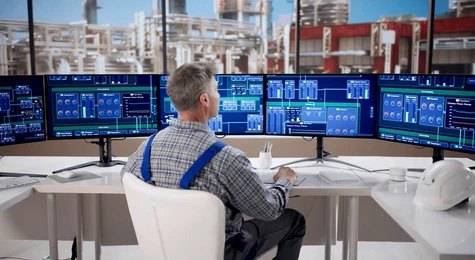
Innovation Supporting Reliable Operations
Technology plays an essential role in every stage of Karachaganak Field's operations. Modern engineering solutions, digital monitoring, predictive maintenance, and advanced production systems improve safety, strengthen operational reliability, and increase production efficiency across the field.
Continuous investment in new technologies enables the optimization of facilities, transportation systems, and processing infrastructure while supporting responsible environmental management and sustainable long-term field development.
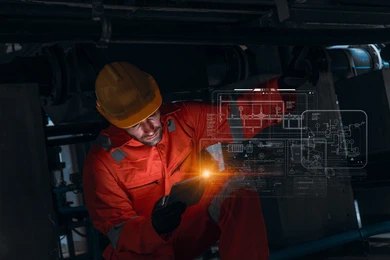
Technology Built Around Four Priorities
Every technology investment is evaluated according to its ability to improve operational safety, maximize production efficiency, protect critical infrastructure, and reduce environmental impact throughout the life of the field.
Operational Safety
Modern monitoring systems and intelligent engineering solutions help identify operational risks early while supporting safe working environments across facilities and transportation networks.
Asset Integrity
Digital inspection systems, corrosion management, and predictive maintenance extend equipment life while minimizing unplanned shutdowns and production interruptions.
Production Efficiency
Process optimization, equipment upgrades, and advanced compression technologies improve production capacity while maintaining stable operating performance.
Environmental Stewardship
Engineering innovation supports responsible energy production through reduced emissions, efficient resource utilization, and improved process performance.
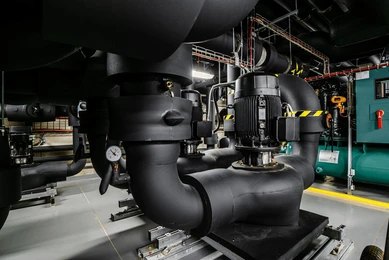
Intelligent Pipeline Monitoring
Pipeline transportation is a critical component of upstream oil and gas operations. Karachaganak Field utilizes advanced monitoring technologies to continuously assess pipeline conditions, strengthen infrastructure security, and improve operational reliability.
Modern fiber optic communication systems are capable of detecting abnormal ground movement and external disturbances near pipeline corridors. By providing early warning of potential risks, these systems enhance operational awareness while reducing the need for extensive manual inspections.
Continuous monitoring improves pipeline integrity, enhances response capabilities, and contributes to safer, more reliable transportation of hydrocarbons across critical infrastructure.
Technology Supporting Infrastructure Protection
Real-Time Surveillance
Continuous monitoring provides operators with immediate visibility of pipeline operating conditions and surrounding activities.
Fiber Optic Detection
High-performance fiber optic systems identify vibrations and ground movement along transportation corridors.
Risk Identification
Early detection enables faster response to potential operational or environmental threats.
Operational Reliability
Improved monitoring supports long-term infrastructure performance while minimizing unnecessary inspections.
Protecting Critical Infrastructure
Equipment integrity is fundamental to safe and efficient production. Digital asset management systems consolidate inspection records, corrosion assessments, maintenance history, and operational data into a centralized engineering platform.
Engineers use intelligent risk-based inspection methodologies to prioritize maintenance activities according to equipment condition rather than relying solely on fixed inspection schedules. This approach improves equipment reliability while reducing unnecessary downtime.
Inspection Records
Centralized digital databases maintain comprehensive inspection histories across facilities and pipelines.
Corrosion Analysis
Continuous evaluation of corrosion trends supports proactive maintenance planning.
Risk Assessment
Intelligent software evaluates operational risk and equipment condition using engineering data.
Maintenance Planning
Optimized maintenance schedules improve equipment availability while extending operational life.
Non-Destructive Testing Technologies
Maintaining the integrity of pipelines and processing facilities requires advanced inspection methods capable of detecting potential issues without interrupting production. Modern Non-Destructive Testing (NDT) technologies allow engineers to assess equipment condition while minimizing operational disruption and maintenance costs.
Long Range Ultrasonic Testing
Guided wave technology enables inspection of long pipeline sections from a single test location, reducing excavation requirements and improving inspection efficiency.
Corrosion Monitoring
Continuous wall thickness assessments provide early identification of corrosion, helping maintain long-term equipment reliability.
Risk-Based Inspection
Inspection activities are prioritized according to equipment condition, improving maintenance planning while reducing unnecessary shutdowns.
Asset Reliability
Accurate inspection data supports informed engineering decisions and extends the operational life of critical assets.